
Beauty of the Beasts
Jo Wimpenny
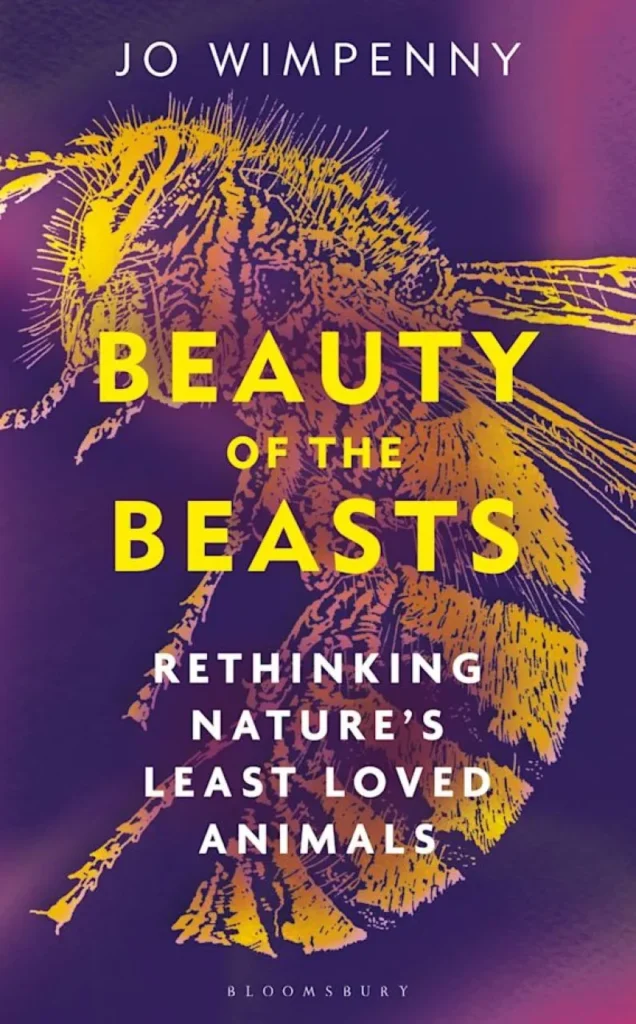
Around 12,000 years ago, humans first began to ‘curate nature’ by growing crops and farming livestock. The primitive agriculture of the neolithic era marked the beginning of human civilisation as we know it today. An “extraordinary change in how we lived and interacted with the world”, Jo Wimpenny tells us; “People’s lives became less entwined in the fluctuations and the richness of the natural world, and the consequences of this separation were profound” (p. 14). This separation, and our belief in the significance of it, instigated a human superiority complex with which we began to imagine ourselves as not only bifurcated from nature but elevated above it. In essence, Beauty of the Beasts, challenges us to question the validity of our self-styled dominion and reminds us that when we cast condemnation or salvation on the animals of the Earth, we do so based on biases and whims that we barely understand ourselves.
Lest that sound like a chore, it should be noted that this book is extremely fun. Wimpenny approaches her subjects (whether maggots, otters, cockroaches or humans) with an openhearted tone that manages to be equal parts playful and informative. Across eight chapters, the reader is deftly guided through the natural histories, life cycles and behaviours of reviled species. The author’s pleas for us to no longer find animals disgusting (e.g. maggots) or terrifying (e.g. sharks) will probably fall on deaf ears, however, no reader will come away from this book without realising that each of the species covered is genuinely fascinating and magnificent… if it is taken on its own terms.
The book’s conclusive (and my favourite) chapter ‘The Good the Bad and the Animal’ considers the behaviour of animals that we have historically ascribed good ‘moral’ characteristics too, such as penguins, otters and Bottlenose Dolphins. Wimpenny, pulls no punches in revealing the frankly disturbing sexual aberrations and homicidal tendencies of animals that we have deemed ‘cute’ and ‘similar to us’, and thus swiftly preceded to sanitise in our depictions and understandings. This chapter means that Beauty of the Beasts, like all good and true books about nature, should come with a content trigger warning (necrophilia, coprophilia, cannibalism – it has it all). Readers who are in the dark about the pastimes of Disney’s favourite mammals may experience a crisis in faith comparable to that of Charles Darwin when he learned of the life cycles of parasitoid wasps (he was quite reasonably horrified).
While the book is entirely suitable for nature novice’s, I suspect that even the most weathered experts will learn a few things from it. Its only limitation is a slight one and proportionate to its scope. Obviously, Wimpenny is a zoologist, and this book is about animals, but it would be nice to see some similarly enthusiastic odes to the despised and/or forgotten flora and funga of the world. Despite the author’s observation that a perceived lack of charisma has held the wasp, snake and spider back in conservation efforts, it would be an even more difficult task to win people over to the charms of, for example, an important rare sedge.
Beauty of the Beasts arrives with us at a time when our government is scapegoating and marginalising protected species and rolling back (or working on ways to roll back) environmental protections at an unprecedented rate. If we cannot start to learn to understand the intrinsic value of the more-than-human world and learn to coexist within it, we will be truly out of luck. More than just a defence of maligned species, this book serves as a potent reminder that human exceptionalism is a doomed fantasy.
Reviewed by Sam Hackney, Publishing Assistant at British Wildlife.