
Pet-flea treatments and freshwater invertebrates: in conversation with Hannah Bourne-Taylor
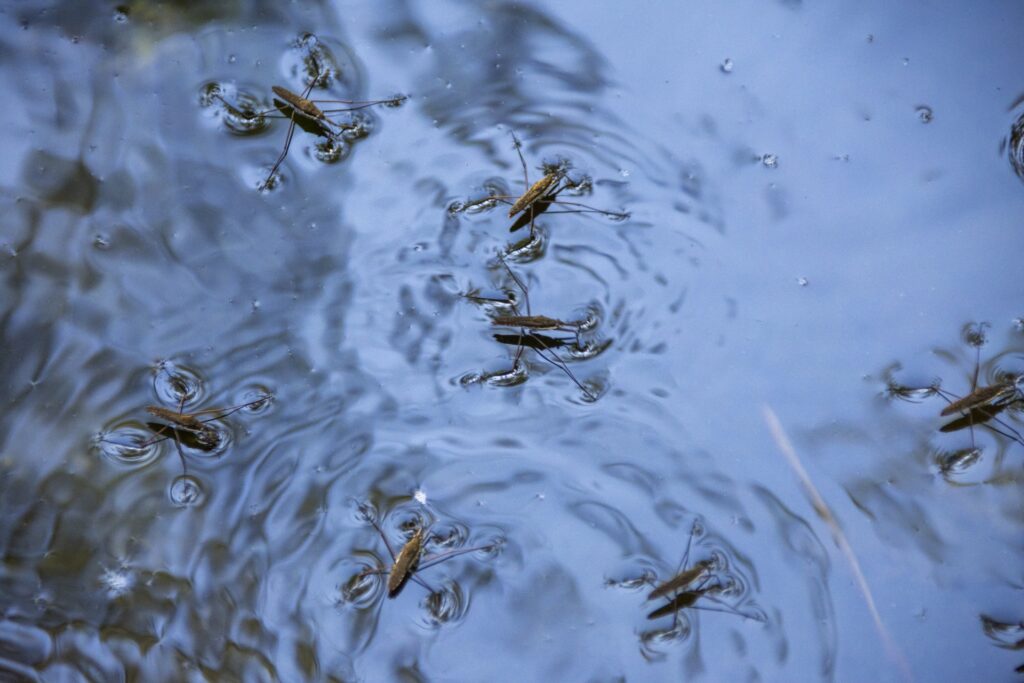
Common Pond Skaters Gerris lacustris Public Domain (CC0 1.0)
Pesticides that are banned for outdoor use in the agricultural sector are routinely being used on pets to control ticks and fleas. There are lots of different chemicals used, but Buglife has focused on the two most common, namely fipronil and imidacloprid. To see Buglife’s full report that goes into detail about just how toxic these chemicals are, click here.
Veterinary medicines, including fipronil and the neonicotinoid imidacloprid, are widely found in English rivers. Chronically toxic to non-target species, they are negatively affecting freshwater invertebrates and wider ecosystems. Pesticides used in veterinary medicines are currently not routinely monitored or assessed by government regulators. Waterways with high concentrations of imidacloprid and fipronil have been found to have up to a 90% decline of invertebrates. Use of fipronil and imidacloprid in veterinary tick and flea treatments requires the urgent attention of the industry and policy makers to reduce use and impact on the environment.
In our June issue, Hannah Bourne-Taylor described the current push for greater regulation of these highly toxic chemicals in veterinary medicines. This is a fast-moving and active campaign, with a parliamentary inquiry into the subject continuing as the magazine went to print. To get us up to speed, we recently caught up with Hannah on the latest developments, and also heard from Senior Veterinarian Surgeon Martin L. Whitehead, who spoke alongside Hannah at the inquiry: read the conversation below.
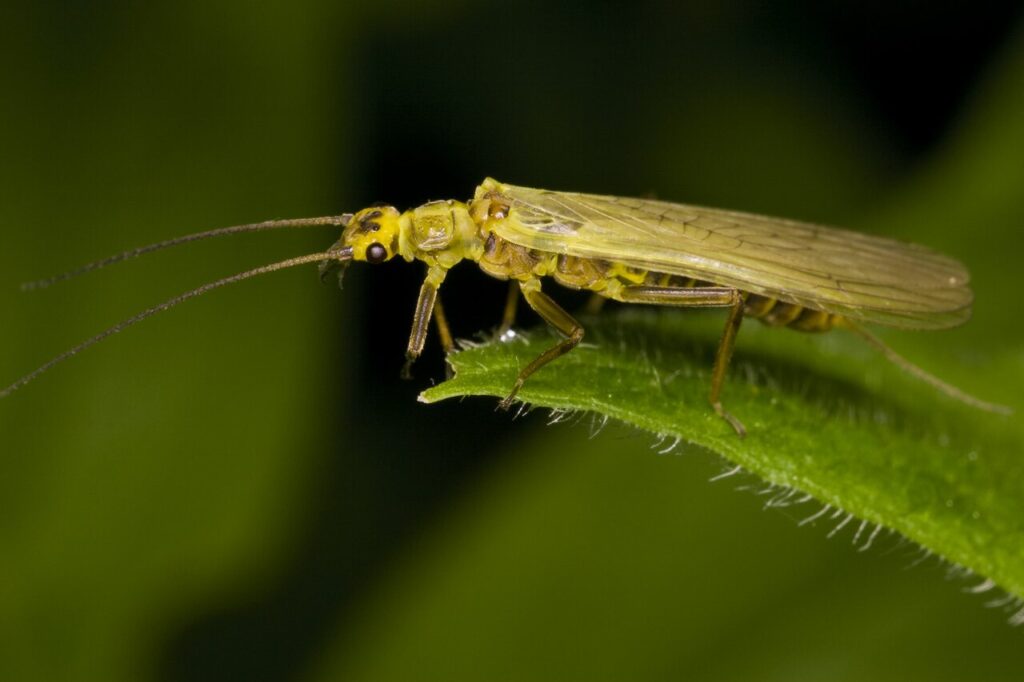
© Tomas Tarvainis (CC BY-NC-SA 4.0)
Q. An inquiry into two parasiticides commonly found in pet-flea treatment, fipronil and imidacloprid, was held this month with evidence given to HOL. Could you tell us a bit about this hearing and the significance it holds for the future use of the chemicals?
Hannah writes: This was a short Inquiry, with four sessions where the Committee scrutinised information given to them by ecologists, environmentalists, vets, industry and regulators. To watch the sessions or/and read the written evidence from all stakeholders, click here.
Inquiries don’t lead directly to legislation or policy change but can bring about more awareness that leads to influence of party politics, government and potentially action.
Concerns were raised about the lack of monitoring and regulation, and particular focus was placed on the need for the risk assessment criteria. The main debate was around the fact that the VMD states that the assessments for veterinary medicines are ‘rigorous’ but that the environmental evidence exposes both a regulatory loophole and the systematic failure of risk assessment criteria for pesticides used in veterinary medicine.
To read Buglife’s written evidence for the Inquiry, click here.
Q. Has any timeline for a ban/ regulation of the chemicals been set out? When should we expect to see any action?
Hannah writes: No. And nor is a ban officially on the cards at all. The Veterinary Medicines Directorate’s call to evidence regarding the legal ‘distribution category’ of fipronil and imidacloprid spot-on products has just ended and the conclusions of this are likely to be shared in June 2027. The Inquiry conclusions are likely to be published before parliamentary recess at the end of July.
Q. Did any new evidence crop up during the hearing? If so could you tell us a bit about it?
No but as the ecologists stated, there is more than enough evidence of ecological harm and if there is any doubt in that (which would be unexpected given there are over 10,000 scientific reviewed papers on imidacloprid’s effects on freshwater invertebrates alone) the Precautionary Principle, that is a legally binding aspect of The Environment Act, should be applied. (Under the Environment Act 2021, the precautionary principle dictates that where there is uncertainty about the risk of environmental harm, protective measures should be taken without having to wait for conclusive scientific proof that harm will occur.)

Q. What advice have the BVA given?
Martin writes: The BVA have a detailed policy position on this topic, but their advice is summarised here. Treating active flea infestations on dogs and cats is necessary, of course. However, the large majority of parasiticides are not used to treat current infestations, but to prevent infestations. The BVA’s primary point is that vets should not be prescribing ‘blanket’ preventive treatment – treating to prevent multiple parasites year-round – but instead should use ‘risk-based’ prescribing, using pesticides to prevent infestations in only those animals at high risk of infestation, or where the consequences of infestation are likely to be severe. Their recommended approach can be summarised as “use as much as necessary, and as little as possible”.
Vets are prescribing, and owners using, much greater amounts of parasiticides than are necessary.
© Kyfishfishfish (CC BY-SA 4.0)
Q. What could pet owners do differently instead of using these chemicals?
Martin writes: The most important thing is to use less of these chemicals! These pesticides are certainly useful – there are health and welfare benefits to pets and people, but they also do harm, especially to the environment. The majority of the volume of pesticides applied to dogs and cats to prevent flea infestations is of no benefit to the animals or to public health, because the animals would not have got an infestation in the pesticide’s period of effectiveness in any case. Most of the preventive parasiticides sold are, in truth, for owner convenience and peace of mind, not for any actual animal or human health benefit.
Instead of routinely applying pesticides to pets, monitor your dog or cat for fleas. Once a day over summer and autumn – less often over winter and spring – run a flea comb over your pet, especially towards the back end. It takes less than a minute. If you don’t already know how to recognise fleas and, particularly, flea dirt (especially the ‘wet paper towel’ test), Google how to do so. If pets don’t have fleas, there is no need to treat them with pesticides. If you monitor frequently and you see evidence of fleas, the infestation will be early and easily cleared up with a single application of one of the newer parasiticides. That approach is better for the environment and saves owners money.
Hannah Bourne-Taylor is an author and environmental campaigner. Her latest book, Nature Needs You: The Fight to Save our Swifts, was published in paperback by Elliott & Thompson in May 2026.