
There have been many county floras both in Britain and Ireland in recent years, most of them recording vascular plants in unprecedented detail. Even so, I think this one stands out as exceptional. It is the first flora in modern times of the ceremonial county of Brecknock, also known as Breconshire or Brycheiniog (now part of Powys). As you probably know, field botanists stick to the old county system because it makes far more biophysical sense than the new one. Brecknock is the botanical vice-county 42. It is characterised by expanses of moorland with innumerable fragments of ancient woodland, rocky gorges and meadowland running along the narrow river valleys (I had some little experience of them both working for the Lottery in the 1990s and, later, clambering cliffs in search of rare sorbi for my book Chasing the Ghost). And though much of the bedrock is acidic, there is some limestone in the south which certainly helps with the biodiversity.
The author, Mike Porter, lived in the county all his life and was the BSBI recorder from 1968 onwards. I say ‘was’ because, sadly, he died in 2025, aged 90, while his life’s work was still going to press. His flora was finished by his successor as recorder, John Crellin. And what a magnificent piece of work it is. Brecknock is noted for difficult plants such as sorbi (whitebeams) and hawkweeds (the latter section, of 23 pages, was drafted by the current expert, Tim Rich). Porter himself was an authority on Rubus (brambles) which take up 35 pages, and he also had a good go at dandelions (33 pages). Every species, including microspecies, native or non-native, is mapped at tetrad scale along with the customary details of first records, status, ecology and locations (specific locations are given a monad, that is, four figure, grid reference). The main botanical sections are headed with neat watercolour drawings by Lizzie Harper and there are also 43 paintings of plants in their landscape context by Meg Stevens in addition to the 400 or so excellent colour photographs.
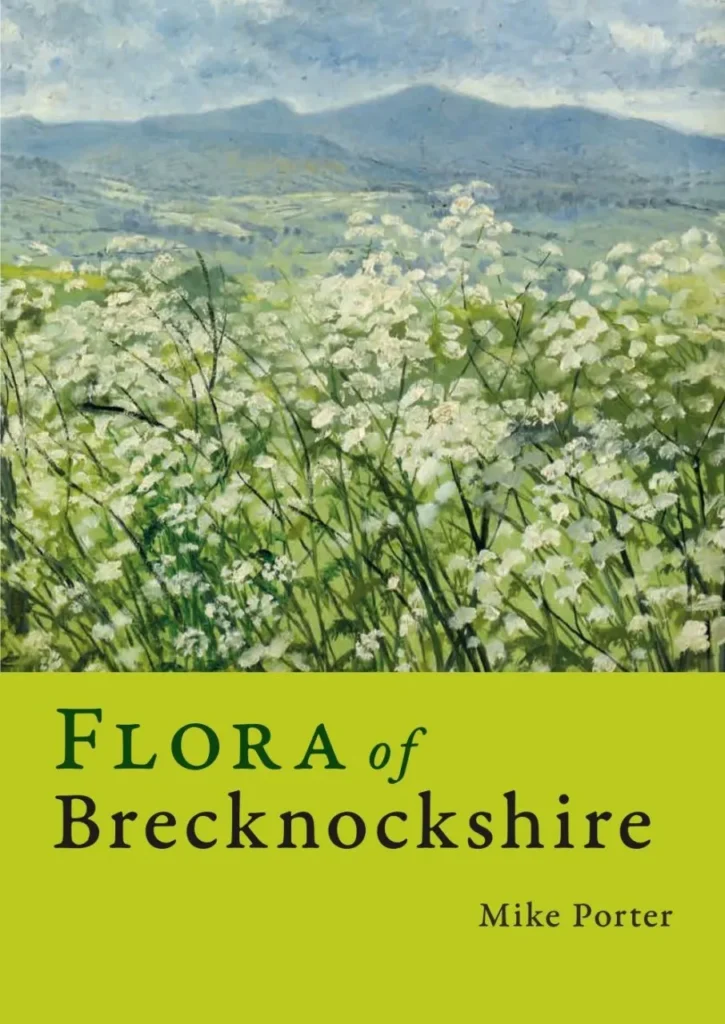
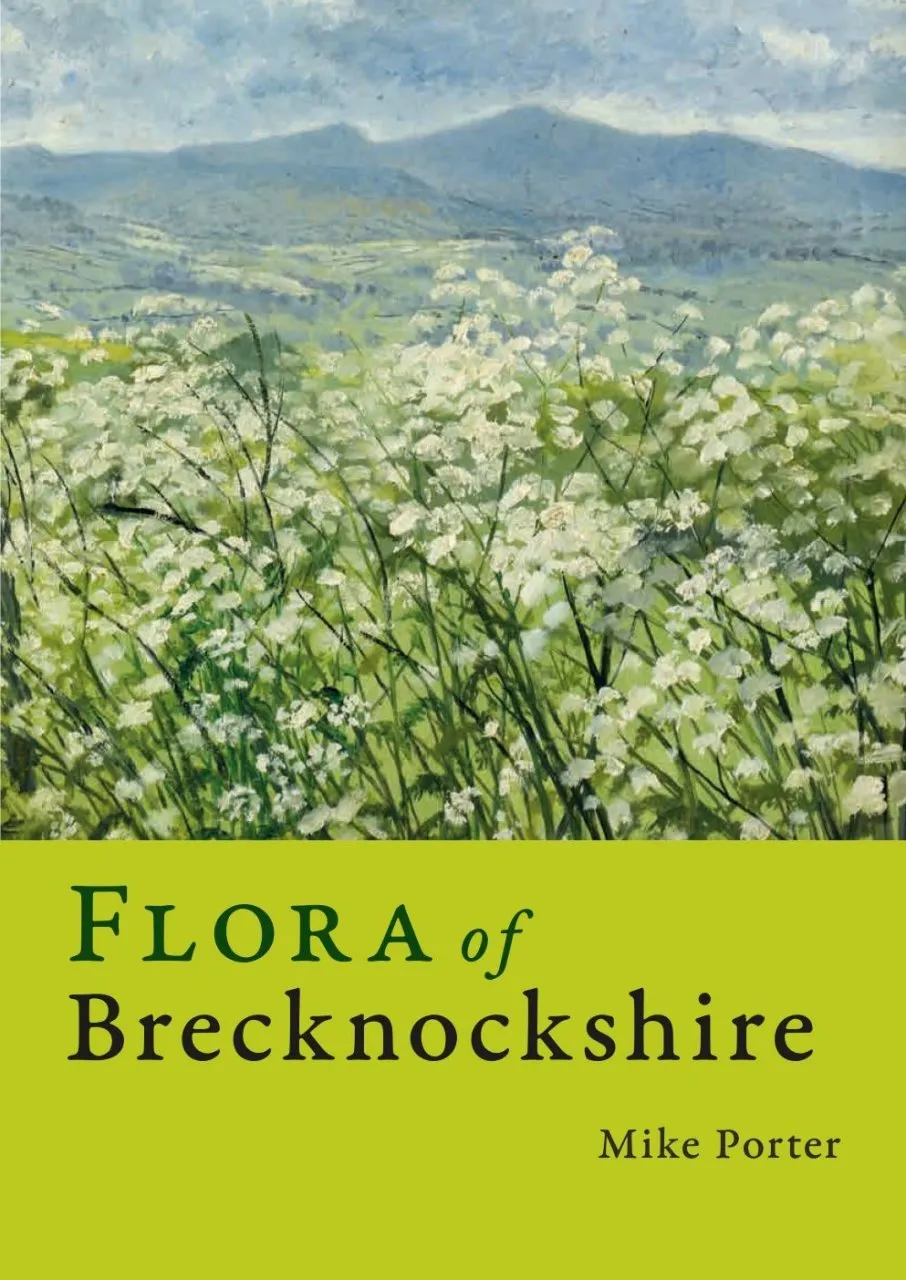
A welcome innovation is the inclusion of conservation sites. Brecknock contains half a National Park, six NNRs, 17 Trust reserves and no fewer than 80 SSSIs, all of which are detailed. The botanical history of the county is charted in detail from 1666 onwards with special reference to the county’s botanical hero, Augustin Ley, vicar of Sellack. The flora is well packaged in A4-format, with colour on every page, lovely blue endpapers, and a cover featuring what I first took to be iced flowers, but which is in fact an impressionistic rendering of Cow Parsley with hills in the distance.
This is a beautiful flora, a tribute to the life work of one of Wales’s best field botanists. It is destined, I am sure, to become the very model of a modern county flora, one to rank with Arthur Chater’s Flora of Cardiganshire (2020) as a supreme example of one man’s botanical Odyssey.