
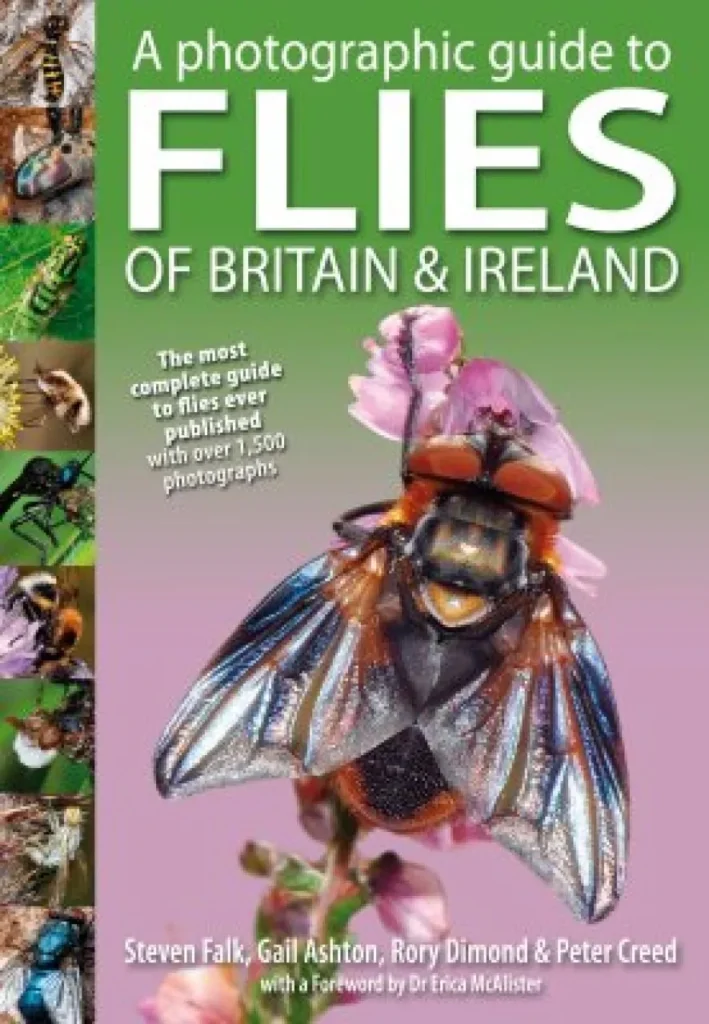
The first flies were basking in February sunshine on my garden wall when A Photographic Guide to Flies plopped through the letterbox. Both the flies and a book which could help me to identify them are very welcome after a dull, wet winter. As fly doyenne Erica McAlister points out in her foreword, this book is the first volume dedicated to all the British and Irish flies since Colyer and Hammond in 1951 and the first ever photographic field guide to them. Its publication will inspire many a dipterological adventure.
Following the richly-illustrated format of the Photographic Guide to Insects by Paul Brock (Pisces 2nd edition, 2019) and designed by Peter Creed, Flies shares the hallmarks and high standards of its progenitor with 1,500 high quality photographs of 1,300 of our more distinctive fly species. With over 7,300 to choose from, this is no mean task, but the authors have risen to this challenge with a canny intuition for what naturalists will most want to find and identify.
The book begins with an illustrated guide to fly structure, displaying a unique lexicon of dipteran bristles, wing venation and thoracic detail. Although we might not use these features as we scan the photographs, they can be essential in clinching an identification. This structural guide is supported by a glossary of technical terms, also essential and rewarding careful study. Calyptrate flies for example have ‘….a ptilinal suture and usually well-developed calypters’, a reminder of the rigorous approach this book needs to take with such a diverse group of insects. There are useful and informative essays on fly diversity and classification, biology and behaviour, flies in the food chain, how to make your garden fly-friendly and photographing flies, leading us neatly to the portrait galleries.
In choosing which species to include in the photographs, the authors explain that they have plumped for those with a distinctive appearance or biology or, in cases where species are very similar, have included representative examples of their families.
Users of Steven Falk’s excellent Flickr pages will be pleased to see his work featured strongly: around 40% of the photos are his and there are carefully-chosen photographs by 186 contributors in all.
View this book on the NHBS website
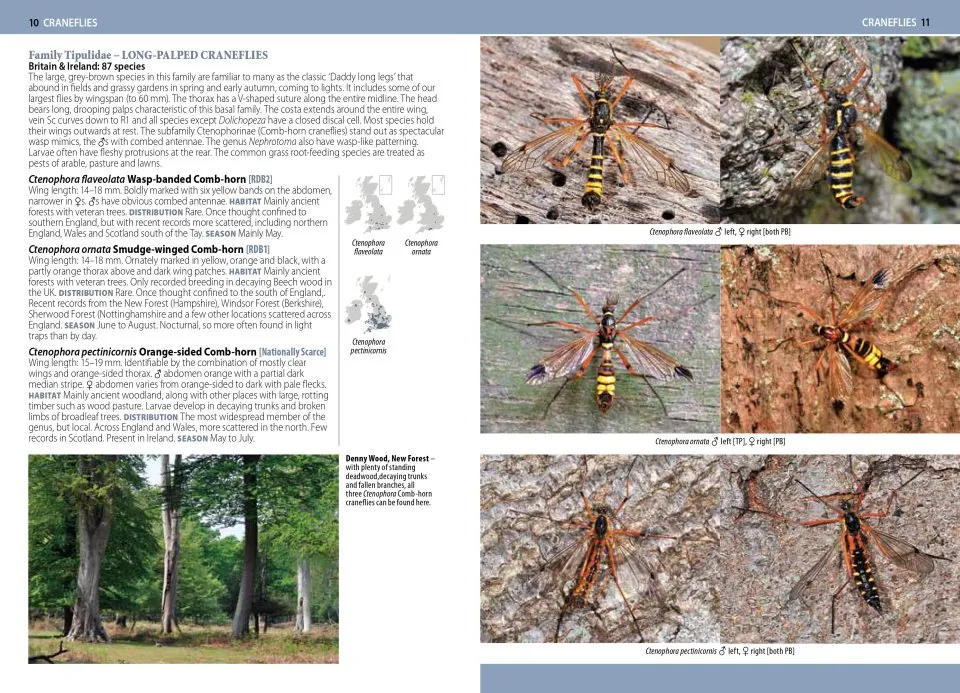
All 108 fly families with published records in the UK are included in this dazzling selection and there is complete coverage of robberflies, soldierflies, horseflies and bee-flies. Around two thirds of the hoverflies are represented and, as a relative ingenu to Diptera, I was particularly pleased to see so many of the tachinids: about half of these bristly flies have photographs. Staying with these parasitic flies, I found it useful that in some cases where sexes can appear very different, for example Phasia hemiptera and Ectophasia crassipennis, both male and female are illustrated. The tachinids also demonstrate how up-to-date the book is. Until recently, the metallic green Gymnocheta viridis had no confusion species in the UK, but the authors acknowledge two other relatives G. magna and G. lucida which occur in Scotland. Flies are a moving target: since 1993 at least 40 species of tachinids alone have been added to the UK list. The short descriptions accompanying the photographs are miracles of compression, distilling vital information about size, behaviour and habitats: thumbnail maps for many species give an indication of distribution. Many flies have been christened with user-friendly names which may not suit everyone, but do demonstrate the sheer wonder and diversity of our Diptera. Who would not want to find a Banded Beegrabber, a Stripe-headed Little Snailkiller or a Blotchwinged Woodlouse-fly?
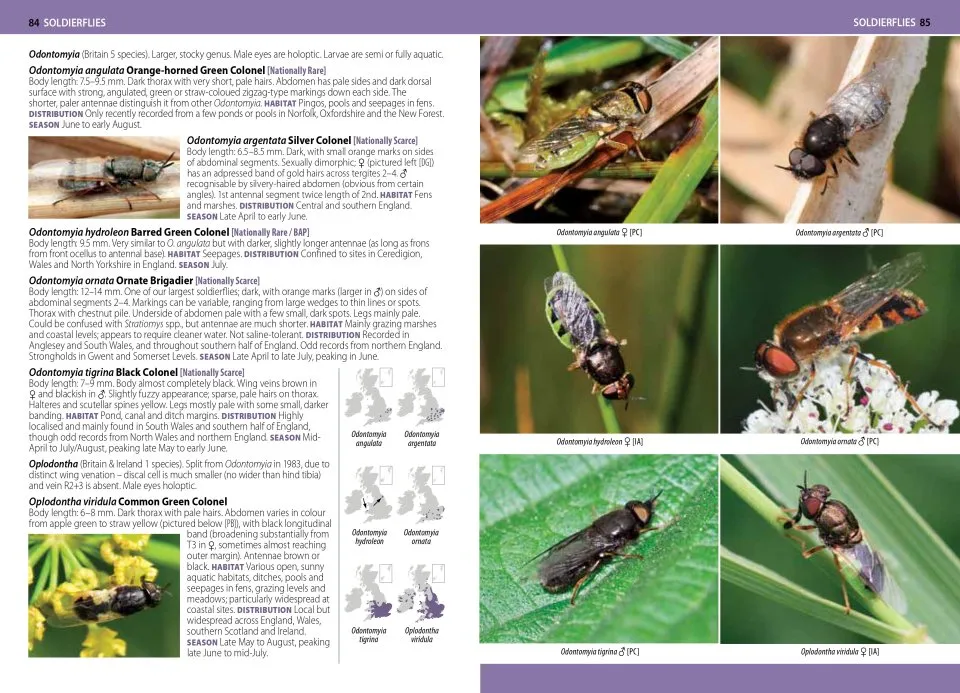
Each time I leafed through the pages, I met families of flies which were new to me and previously the preserve of connoisseurs: Diastatids and Campichoetids, balleyed flies and log-strollers and grass flies and gout flies. The photographs are only part of the picture, though. The authors make it clear that identifying some species from photographs alone is not possible (I discovered this when optimistically visiting the Brachyopa hoverflies page) and with this in mind, they conclude the book with a bibliography for those wishing to take their studies further.
To have assembled such a comprehensive collection of fly images is a terrific achievement and it is superfluous to say that this ground-breaking guide should be on the shelves of every British naturalist. Field trips to remote regions or strolls in the garden, will take on new dimensions thanks to the revelations provided by this book.