
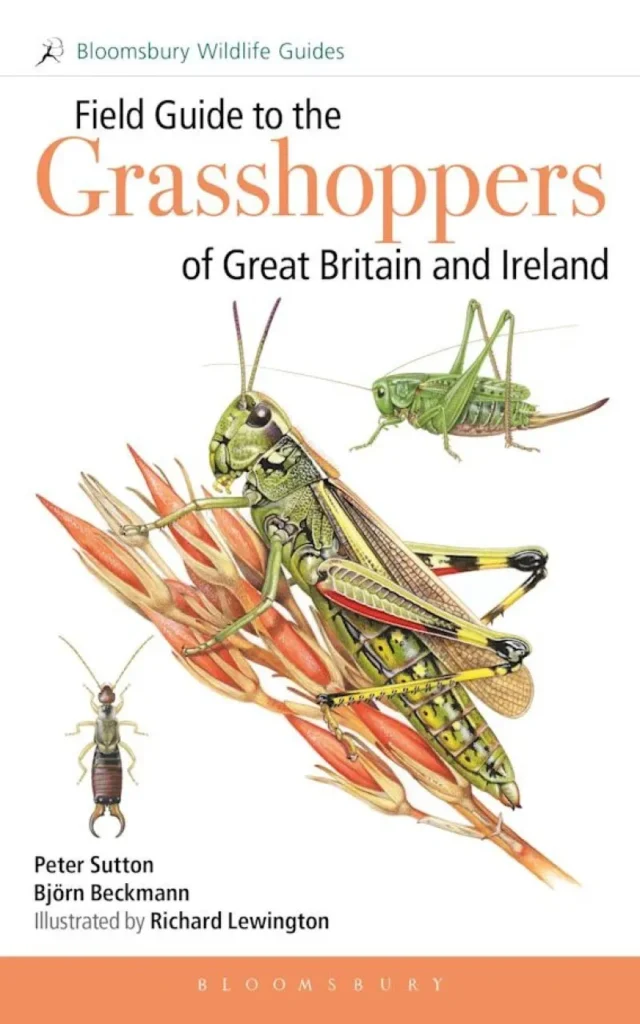
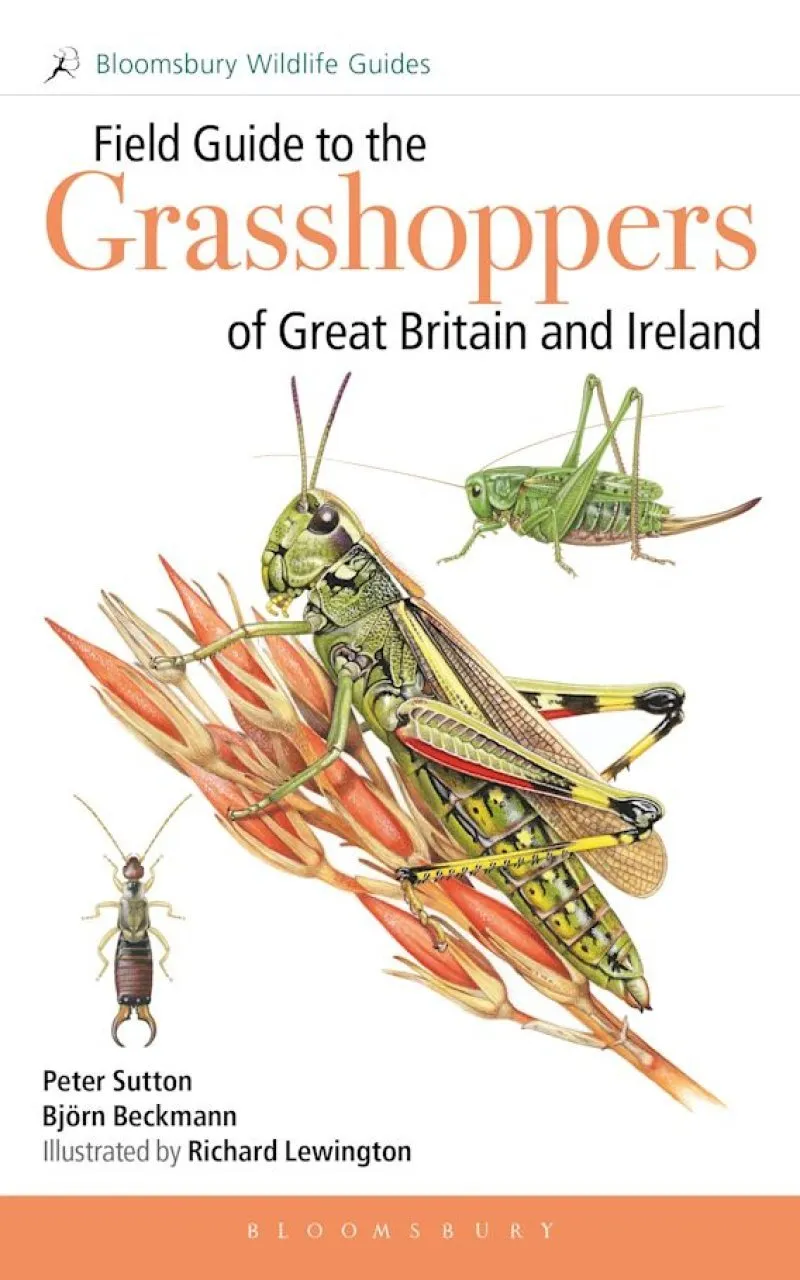
A tour of my bookshelves reveals no fewer than eight books dealing with the UK Orthoptera. They begin with Ragge’s classic Wayside and Woodland edition from 1965 and Harley’s handsome and well-thumbed volume by Marshall & Haes (1988). More recently there has been a selection of national and regional field guides, plus Ted Benton’s New Naturalist 120 (Harper Collins), which is particularly strong on biology.
With so much choice, do we need another guide? On the evidence of this book, the answer is a resounding yes. It has been some time coming, but the wait has been well worth it. Grasshoppers, crickets and their allies, which in the UK include cockroaches, earwigs, stick insects and a praying mantis, are charismatic insects, many of them strongly reactive to climate change. Several continental species are now in the process of colonising our islands, while previously scarce residents are spreading their wings. Representing crickets alone, since Ragge and Marshall & Haes, Southern Oak Bushcricket, Large Conehead, Tree Cricket and two sickle bearing bush-crickets have set up shop in our islands, while Roesel’s Bush-cricket and two coneheads have romped north and westwards. There are more stick insects at large than ever and the European Praying Mantis and two small cockroaches are settling in. There has, as the authors say, ‘never been a better time to study the orthopteroid fauna of Great Britain and Ireland’ with a strong potential to make new discoveries. By contrast, a few species such as the House Cricket and the Oriental Cockroach are harder to find nowadays as we make our homes and workplaces less congenial to them.
So, as a contemporary record alone, this book is invaluable, but it is much more than that. It begins with an introduction to the orthopteroid insects, which guides us through their ancient origins, their role as habitat indicators and their anatomy. The succinct and informative essays on song, courtship, mating and egg-laying and migration and distribution are packed with information and well worth reading. If you plan to record and survey them there’s a useful section on equipment and techniques and if you’re travelling to see particular species or want to know more about those in your area, there are concise regional reviews written by local experts with advice on what to find at which location.
View this book on the NHBS website
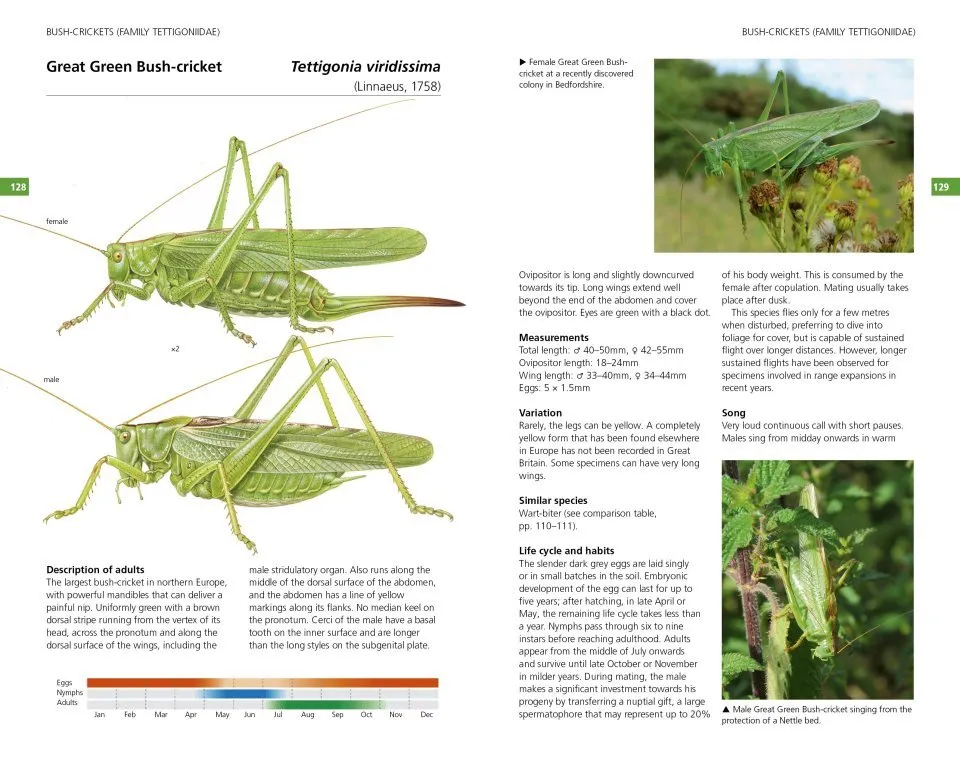
The 65 species accounts comprise the core of the book: six earwigs, 16 grasshoppers and groundhoppers, 23 crickets, ten cockroaches, nine stick insects and a mantid. Each group has a well-illustrated and thorough identification key, especially useful for tackling tricky species pairs such as Cepero’s and Slender Groundhoppers or Heath and Field Grasshoppers. Each species account comprises a description and comparison with similar species, details of its life-cycle, including phenology, behaviour and habitat, status and distribution and comments on conservation. There are also handy tips on how to find it. For the American Cockroach, for instance, the authors recommend liaising with your local pest control expert, and the best way to locate the Lesser Earwig, as I know to my own cost, is to rummage in the warmest recesses of dung-heaps. Where sound is an important identification feature, there are sonograms and a QR code link to recordings. As someone who ‘lost’ the sound of most crickets years ago, I was grateful for the tips on tuning our bat detectors to the optimum frequencies.
The illustrations by Richard Lewington are all we have come to expect from one of our finest entomological artists. Highly decorative and accurate, they enhance the book superbly: you almost expect the Prickly Stick Insect to walk off the page! Carefully chosen photographs supplement the artwork. A thumbnail map for each species outlines the broad UK distribution and there are more detailed hectad maps at the rear of the book.
It is in the nature of a review to find the occasional quibble, but the content and clear design make this book pretty much fault-free. I am aware of a record of Greenhouse Camel Cricket from Warwickshire in 2022, although we are told that it has not been recorded in the UK since 2008, and maybe illustrations of the ‘pet food’ Tropical House Cricket Gryllodes supplicans and Jamaican House Cricket Gryllus assimilis, both potential escapees, would have completed the roll-call of species. These are minor omissions though and in no way detract from a crisply-designed guide, which deserves to grace the bookshelves of all UK naturalists.