
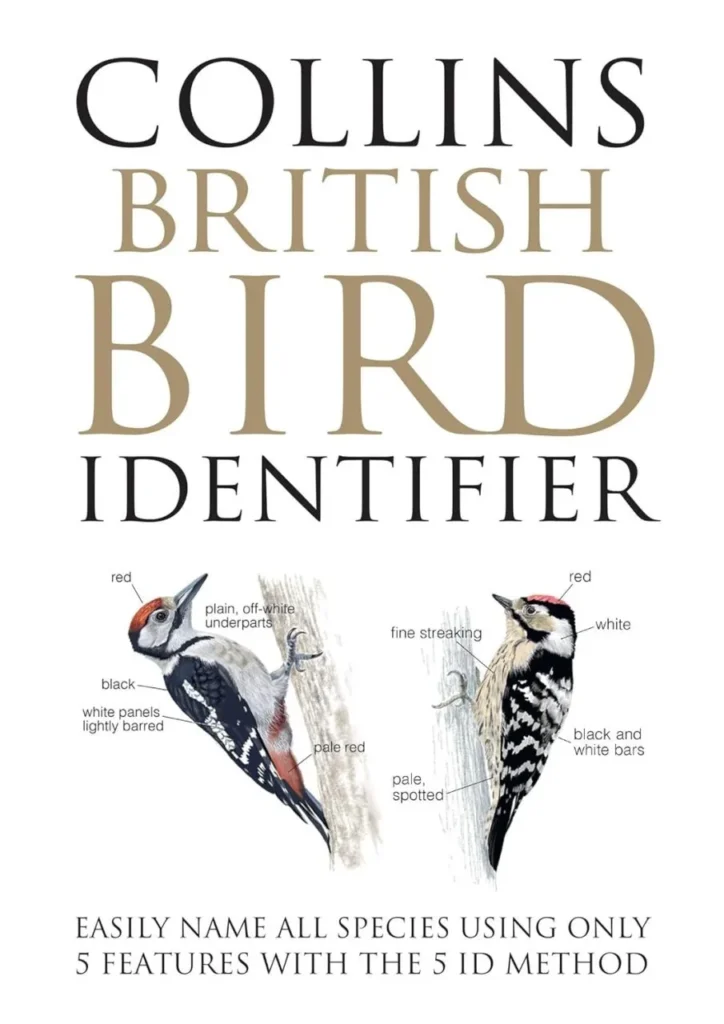
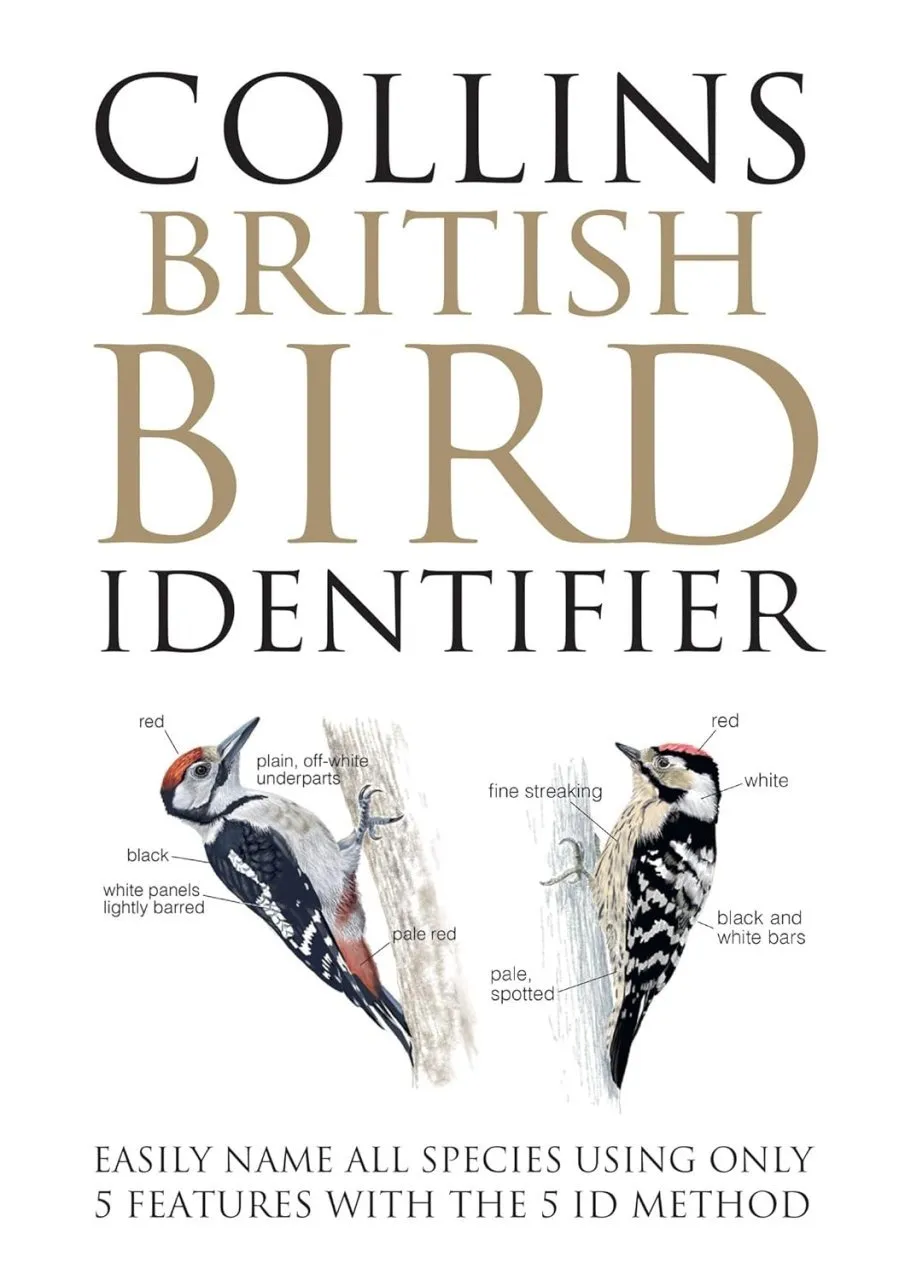
This is a new guide from the Collins stable of bird books. By my reckoning Collins has five guides to birds currently in print and there are many more from other publishers. So, in a very crowded field any new publication needs something special to make it stand out. Paul Stancliffe and Jeff Baker are expert birders who have worked for the BTO for many years and have come up with what they say is a ‘clean and innovative’ method of identification. Years of note-taking, bird-ringing and analysis have led them to the idea that you can distil down the confident identification of every species of bird on the British list using just five key physical features. This guide dispenses with most of the information you would expect, such as distribution maps, habitat preferences, behaviour, calls and songs, and instead presents a series of artwork plates by Jeff Baker with the five features pointed out with a short annotation linked by a rule. This reductionist approach to bird identification can be traced back to the plates and captions from the classic Field Guide to the Birds of Britain and Europe first published by Collins in 1954, and much copied since. The innovation here is the claim that the five points, given a clear view, are all that is needed for an accurate determination. The birds are broadly arranged in taxonomic order. There is a series of coloured dots next to the artwork of the species that indicate what time of year the bird might be seen and the English names of the birds are also coloured according to their status (scientific names are only found in the index).
As a ‘ready reckoner’ the guide works well, with, for example, the key diagnostic features of terns clearly laid out. I can see someone who is a good intermediate birdwatcher using this to hone their ID skills and build up confidence. The guide is only 208 pages so is readily pocketable as opposed to the increasingly heavy traditional field guides. It will also be excellent for bird ringers, faced with an unfamiliar bird (for some of the warblers, details of the wing feather lengths are given). However, the success of many books of this type rests with an understanding of the potential readership. The cover says that it is ‘easy to use for beginners’, but finding the right bird is not that straightforward (how many novices will realise the swifts are now placed near the beginning, after the ducks, and far from the look alike hirundines), and common species are cheek by jowl with mega rarities – that Song Thrush on the lawn, could it be a Wood Thrush, or that Chiffchaff flitting through the canopy, is it a Western Bonelli’s Warbler? Almost certainly not, but as someone who once had to explain to a neighbour that the spotted bird in their garden was not a Nutcracker but probably a Starling, it is surprising how people misinterpret artwork in field guides.
The introduction directs users to other guides and apps for more detailed information on such things as habitat and calls. But surely for many people, birdwatching is at times as much about sound as sight, especially in woodland settings. A minor point is that there are a number of puzzling typos and setting issues (e.g. the last two sentences in Paul Stancliffe’s acknowledgements are effectively repeated), which doesn’t inspire confidence in the proof checking.
For birdwatchers who just want a quick visual way of ensuring they have the right identification this guide will work well and could become a trusted reference source, but for beginners it is perhaps trying to pack in too many rare species in order to be comprehensive.