
Beasts of the Sea
Iida Turpeinen
Translated from the original Finnish by David Hackston
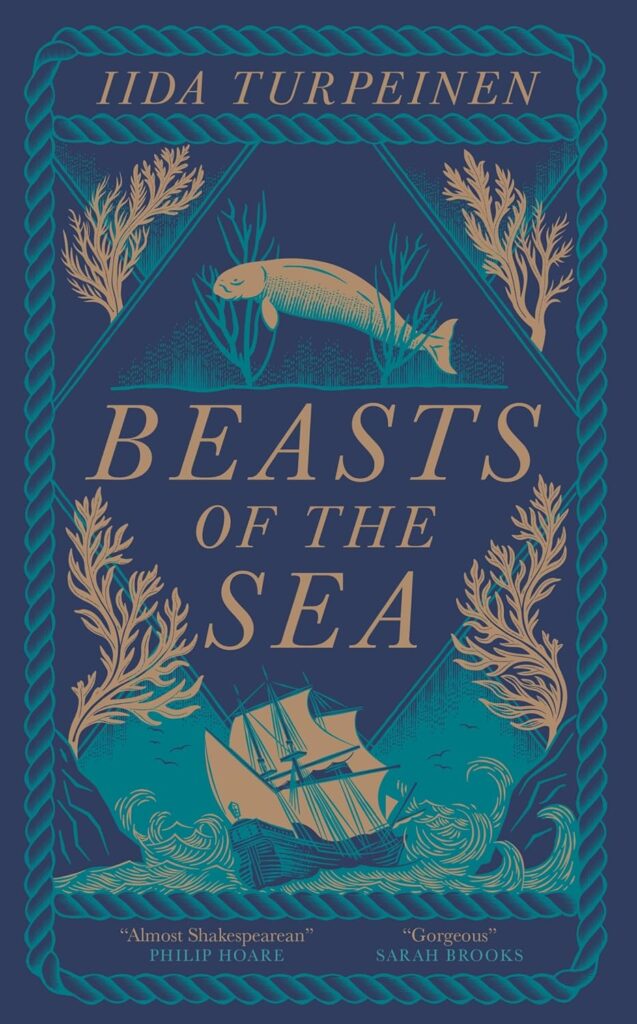
Here’s something a bit different. A Finnish novel based on historical research into a largely failed mid-18th century quest to chart a route from Asia to North America at the behest of Tsarina of Russia. The expedition was led by Vitus Bering, whose name lives on in the Bering Strait and the Bering Sea. Onboard with the crew was the German-born Georg Steller, a naturalist sent to record new species, as well as to act as ship’s physician. Many will associate his name with the impressive Steller’s Sea-eagle and Steller’s Eider, the latter a rare vagrant to our shores. Steller did not officially describe these species; however, he did record the even rarer Steller’s Sea Cow, which tragically became extinct just 27 years after its discovery. This novel is centred on the story of the ill-fated expedition and the demise of both Steller himself and the last population of this enormous relation of the manatees of warmer tropical waters.
The novel is wonderfully engrossing and graphically describes the harsh conditions that the members of the expedition endured when their ship wrecked off a small island near Russia’s remote Kamchatka peninsula. Steller’s determination to collect and record the wildlife of the region despite all the hardships was eye-opening and makes my treks in the British wind and rain seem pretty pathetic in comparison. But what, for me, makes the book stand out is the way Turpeinen weaves the story of the extinction of the sea cow and the subsequent search for complete skeletons to display in museums around the world with changing attitudes to extinction and, indeed, rarity over almost two and a half centuries. This is told through the stories of a few pioneering naturalists and conservators, including some inspirational women, whose careers have predicably been largely ignored.
When Steller discovered the sea cow, one of the prevailing reasons naturalists were recording the fauna and flora of the planet was to more fully demonstrate God’s creation. These creatures and plants existed for people to exploit – think of the passage in Genesis which describes man as having dominion over every living creature – and that it was considered impossible that man (and it was usually men) could completely exterminate what God had created. The sea cows made good eating and undoubtedly saved some of Bering’s crew from starvation. Sailors later following the same route tragically killed and ate the remaining animals. A huge skeleton of Steller’s sea cow (the animal measured 10m in length and could weigh up to 11 tonnes) can still be seen at the Helsinki Natural History Museum. Later, Turpeinen extends her narrative to include the history of more recent extinctions, such as that of the Great Auk and Passenger Pigeon, and the obsession with collecting and curating bird’s eggs.
The novel has been something of a publishing sensation in Finland and has received much acclaim around the world. One wonders if the author had just written a historical account of the tragic events and their aftermath whether the story and its message would have resonated with so many people. Perhaps one of the lessons of this novel is that finding new ways to tell a wider audience about our relationships with the natural world and its plight is one of the ways forward. Sometimes just relating the facts simply doesn’t cut through.
Reviewed by Andrew Branson, Founder and former Editor of British Wildlife.