
Endemic: Exploring the Wildlife Unique to Britain
James Harding-Morris
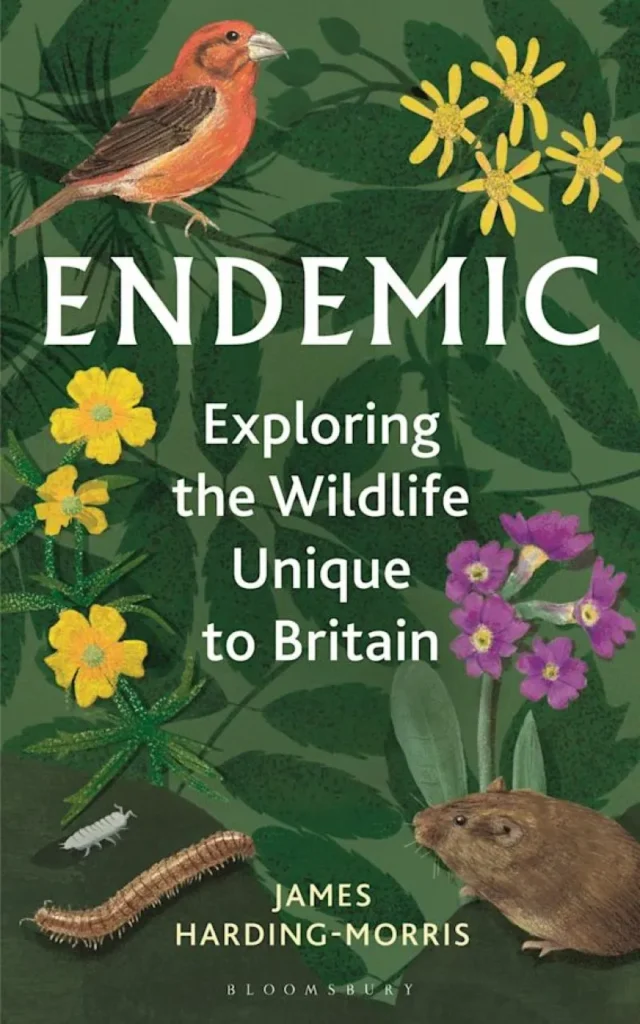
The first of many surprises that await the reader of James Harding-Morris’s Endemic is that it wasn’t written years ago by someone else. The species that are unique to Britain: surely someone has done that one? Well, not until now. One reason – and this is surprise number two – is that no-one knew how many plants, animals and fungi constitute our endemic flora and fauna. Harding-Morris had to compile a list out of any and every passing reference he came across in the literature and on the internet just to get a rough idea. And surprising to me, at least, was that his list had reached a staggering 700 full species by the time he sat down (or rather set off) to write this book.
There is no shortage of nature books conceived around a slightly eccentric and rather self-indulgent quest (I plead guilty). In the case of Endemic, the description would be only half true: there is nothing self-indulgent about the previously unnoticed need to bring attention to a disparate cohort of our most significant species – the ones that, if they are lost from Britain, are lost from the world.
So Harding-Morris sets off to find a representative selection of them. As a self-described pan-species lister, he is no less excited to be frisking the moss for Chater’s Bristletail Dilta chateri (in Glamorgan) than to be attacked by Bonxies Stercorarius skua while searching for the exquisite Scottish Primrose Primula scotica (in Orkney).
Twenty chapters take us to most corners of Britain in search of stoneflies, birds, woodlice, shrimps, beetles, mosses, flowers and trees. Each excursion is engagingly written-up, and any risk of excess geekiness neutralised by Harding-Morris’s mildly self-deprecating style. Some trips yield several species in one go, helped by a legion of knowledgeable friends. Or in the case of Lundy Island, helped by the endemic Lundy Cabbage Coincya wrightii being host to the endemic Lundy Cabbage Flea Beetle Psylliodes luridipennis and the probably-endemic Lundy Cabbage Weevil Ceutorhynchus (contractus var.) pallipes.
I can remember a time, half a generation ago, when there was real concern about the extinction of the old-style naturalists. There were two types: taxon specialists, the only people who were ever likely to notice that Niphargus glenniei, say, when it was discovered deep under Devon by an eponymous Brigadier, was different to any other known Cave Shrimp; and the ones who seem to know quite a lot about all taxa and notice the connections. Both types survived in the end, and Harding-Morris is a youngish example of the latter. A book like this could only have been written by an all-rounder, building on Britain’s long history and – it seems – continuing tradition, of specialist enquiry by people who could be said to occupy ecological niches every bit as unique as their subjects.
I wonder, for example, whether the discoverer of the Manx Shearwater Flea Craetophyllus fionnus went looking for a likely endemic knowing that, firstly, many fleas are host-specific and, secondly, almost all the world’s Manx Shearwaters Puffinus puffinus nest in Britain? Harding-Morris found the bird, but not the flea. He is sanguine about it, noting that it was discovered in 1963 and last seen in 1966. Its known world range was the 50ha of the Isle of Rùm but since no-one has looked for it for sixty years, he might as well try for it while on Lundy.
As a professional conservationist, formerly with the RSPB and now with BSBI, James Harding-Morris knows the importance of his subject. His advocacy is calm and understated, mostly letting the species’ status speak for itself. Every now and again he ponders at the more philosophical end of conservation: ‘we’re all distant cousins who’ve walked different evolutionary paths for a few million years. Should the fleas’ journey through the universe end just because we don’t find them appealing?’ Perhaps the least surprising thing is that no-one in conservation, inside or outside government, appears to have responsibility for the nation’s endemics. Maybe this book will change that.
Reviewed by Laurence Rose