
Lichens of Britain & Ireland: An Introductory Guide
Rebecca Yahr and Frances Stoakley
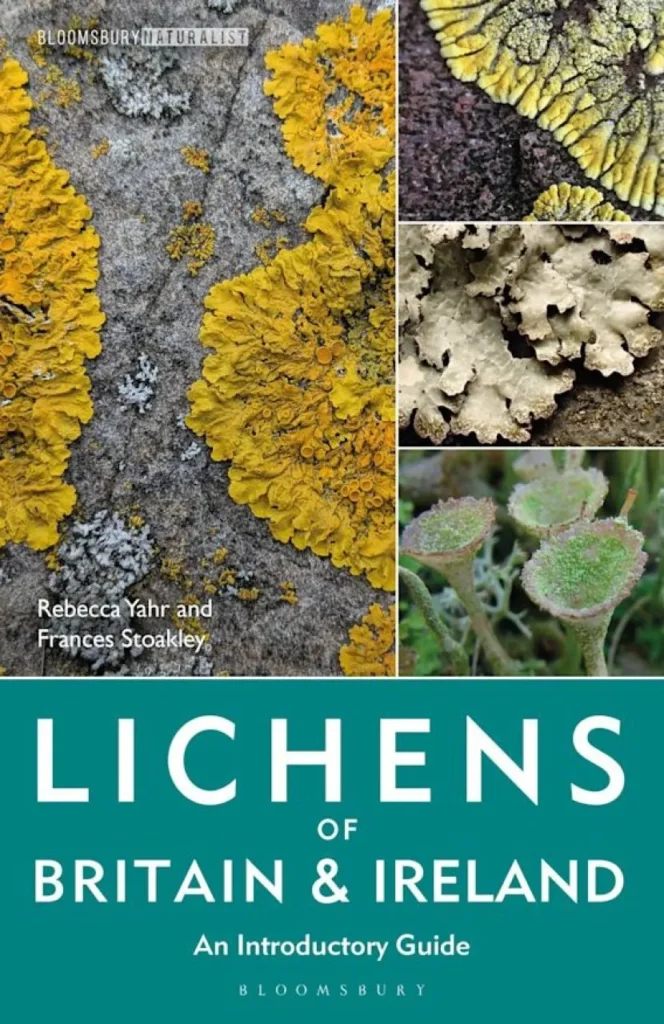
In the early days of my lichen career back in 2017, I attended a lichen course at the
Kindrogan Field Studies Centre in the Scottish Highlands, delivered by Rebecca Yahr and
Frances Stoakley. We spent a week delving into the wonderful world of Scottish lichens,
which to this day is one of the most enjoyable and influential courses I have ever attended.
This course was life-changing for me, shaping the way I perceive the natural world and
cementing my decision to continue studying these remarkable lifeforms. Yahr and Stoakley
were the ultimate duo, where their collaborative teaching styles flowed effortlessly and their
natural synergy was left unmatched. They fostered a learning environment that was fun,
welcoming and encouraging, which was kudos to their kind, supportive and cheerful
personalities. I was in absolute awe of both of them!
Reviewing their new book, Lichens of Britain & Ireland feels like a full circle moment and a
real honour, returning me back to the early stages of my lichen journey, but with nearly a
decade of perspective and insight in between. The energy and enthusiasm that made Yahr
and Stoakley such impactful tutors, is threaded throughout the pages of this book, where
they so generously share their infinite knowledge and insight on the topic. This book is
thoughtfully packaged and delivered in a way that reflects years of refined teaching and
science communication. It is so much more than simply a field guide and has been a long-
awaited resource that provides an approachable means for newcomers to experience the
miniature world of lichens that is all around us.
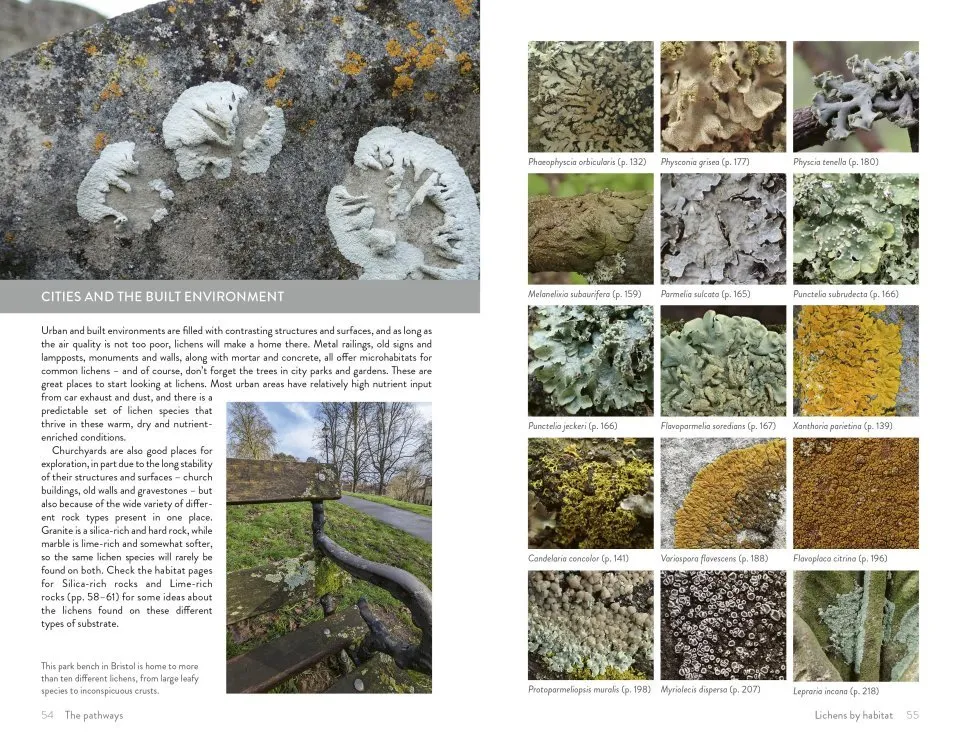
This book provides an introductory guide to lichens, where Yahr and Stoakley have offered three accessible pathways to discover and identify species. Identification is primarily achieved through visual recognition and “picture-matching”, which proves effective in identifying common and visually distinct lichens. This approach differs from the more conventional keys, which are often quite discouraging for beginners. The book is structured by (1) ‘Lichens by habitat’ which provides an excellent way to recognise 12 common species based on habitat type. This is similar to the widely used FSC foldout charts. (2) ‘Common lichen groups’ covers 13 of the main lichen genera/families, which conveniently addresses multiple species that share similar characteristics. (3) ‘Lichens by growth form and colour’ divides the book by the three main thallus growth forms, which are subsequently organised by colour and other shared morphological features. Ultimately, this book provides a refreshing alternative to exhaustive identification keys and this factor alone will have an encouraging and confidence-boosting effect for a beginner audience.
View this book on the NHBS website
This publication is a source of inspiration with a ‘wow factor’ and makes you want to plan expeditions to visit all the wonderful lichen habitats presented in this guide. Britain and Ireland are internationally recognised for their lichens and associated habitats, and this is reflected perfectly in this book. Yahr and Stoakley present a kaleidoscopic collection of photographs, showcasing patterns, colours and intricacies encountered across this wonderfully diverse taxon. One of the finest attributes of this guide is the visual appeal, where photos are clear, high-quality and logically organised to showcase species and detail key features effectively.
It is evident that this book is the product of many years of experience, Yahr and Stoakley being acutely aware of the requirements, confusions and frustrations that beginners encounter in the early stages. For a long time, there has been a lack of accessible introductory material for entry-level lichenologists, which will have inevitably discouraged many enthusiasts with resources that are not necessarily tailored to beginners. Existing keys can feel monotonous and some individuals feel uncomfortable using chemicals. However, this guide has now eliminated two large obstacles due to an absence of keys and chemical identification, inviting a much wider audience to tackle lichens as a group.
As a book review, I suppose there should be an element of criticism, but I must say that this is proving difficult. Any ‘criticisms’ are largely a reflection of the book’s intended audience and scope, but in the spirit of a fair review I have outlined some thoughts below.
Yahr and Stoakley have developed an accessible approach for beginners to identify lichens. However, taking a simplified approach to tackle a notoriously complex and difficult group can come with its limitations, as ambiguity is inevitable. For accurate identification of a large proportion of lichen species, microscopic examination, chemical testing and identification keys are necessary. This book tackles ID through visual recognition and this approach will not satisfy those tackling the more obscure and diagnostically difficult species. However, as this is not the aim of this publication, perhaps this isn’t a criticism at all. Overall, the authors have done a fantastic job in de-constructing terminology, although some beginners might still find themselves referring to the glossary – which is to be expected. Striking the balance is no easy feat.
The diversity of species tackled in this guide is extensive and ambitious. The common and easily identifiable lichens are well-covered, in addition to rarer species only seen in specific habitats or regions. The likelihood is, that most readers will never encounter some of the lichens outlined and the book could have a greater impact targeting common species. However, this comment is counter-balanced by the importance of representing the remarkable diversity of lichens in Britain and Ireland, which will undoubtedly inspire readers to go lichen hunting further afield.
The main critique I have heard from others regarding this book is the absence of identification keys and chemical testing. Unsurprisingly, these critiques are by people who are at the intermediate to advanced level, who use keys on a regular basis. Many of these folks have forgotten how challenging and overwhelming those early stages of lichenology are. Personally, I find the absence of keys and chemical ID a refreshing alternative to the exhaustive keys that discourage most beginners. This is clearly a conscious decision by the authors and is excellent in terms of its accessibility to a wider audience.
As an introductory, beginner-friendly guide to lichens, this publication ticks all the boxes. This guide welcomes everyone at all stages, but is targeted at those searching for an accessible and approachable route into lichenology. It is certainly relevant to those who wish to pursue a life-long interest in the subject, alongside those who might simply want to acquaint themselves with the lichens in their garden or out on a hike. This book is arguably the best beginners guide that we have for lichens in Britain and Ireland. With curiosity, a hand lens and this introductory guide, you will never look at the natural world in the same way again!
Reviewed by April Windle
April Windle is a naturalist with a particular interest in lichens, especially those occupying our rainforest habitats along the western seaboard of the British Isles. She is currently self-employed and involved in a variety of lichen education and conservation projects, while co-chairing the Education & Promotions Committee of the British Lichen Society.