
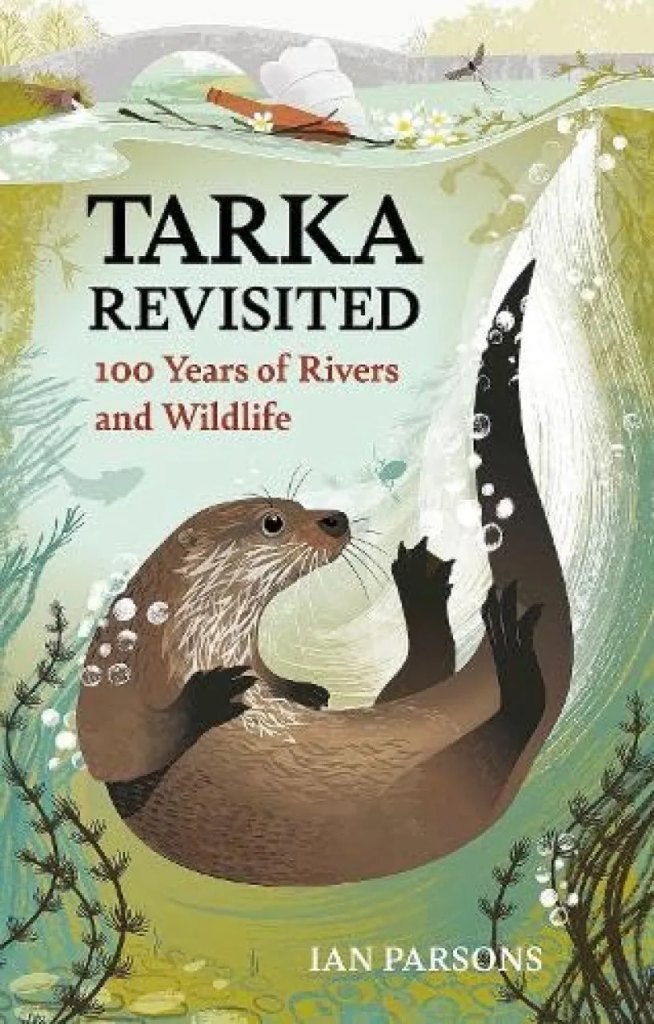
Tarka Revisited: 100 Years of Rivers and Wildlife
Ian Parsons
View this book on the NHBS website
A hugely important contribution to the conversation about our most elusive aquatic mammal, Parsons’ Tarka Revisited gives a rich and compelling overview of the wider ecosystem. The narrative begins by elucidating the otter, which is basically a tubular-bodied piscivorous water weasel that wants nothing to do with us. At the same time, the narrative unfolds a nuanced history of Britain’s growing ecological consciousness. Tracing how literature can shape public attitudes and, ultimately, influence conservation itself, Parsons’ shows how ‘a lot can happen in a hundred years.’ If we are to learn any lessons and preserve what we have left, it would be wise to pay heed.
Henry Williamson’s iconic story, published in 1927, came to occupy a special place in Britain’s cultural heart. Williamson managed to alter the way we thought about otters. A work of lyrical beauty and literary modernism, it was one of the earliest texts to encourage readers to imagine the world from the perspective of a wild animal. Tarka won over generations of readers and helped prepare the ground for the ecological awareness that would emerge decades later. Rachel Carson cited Tarka as one of the earliest influences in the writing of Silent Spring, a seminal text that documented the harm caused by widespread use of DDT. Interestingly both these writers created a tense and compelling readability using storytelling techniques, and Parsons’ companionable, informative style now draws the reader in in similar ways. Tarka Revisited is rife with revelatory touches of foreshadowing, cliffhangers that are set artfully at the end of sections, urging the reader onward and making the book difficult to put down.
Parsons was not comfortable with the violence in Williamson’s tale of otter hunting, with its brutality, nor with its author’s position both as an otter hunter and an acolyte of the Far Right. But he acknowledges that few books have left as profound a mark on Britain’s sympathy for the natural world as Tarka the Otter. When the novel first appeared readers were captivated. Parsons’ attentive eye picks out the scientific nuances we can now see there: the shifting baselines across a century of British wildlife, where Williamson depicts his otters’ living landscape of Corncrakes and Turtle Doves. Parsons notes that these species are just a memory now in what we call Tarka Country. The shifting baseline goes both ways, though. These avian species have diminished, but have been replaced by the arrival of the Cetti’s Warbler, Little Egrets and Collared Doves.
Accompanied by Parson’s informative, companionable tone, the ugly ecological history is laid out: organochlorine compounds which decimated wildlife throughout the entire food chain were banned then replaced with pyrethroids which ‘broke the food chain completely.’ The value of extensive scientific research, alongside common sense personal observation and reflection, is both timely and provocative. And what about the chemicals introduced into rivers by the millions of pet dogs unleashed upon our countryside and riverbanks? ‘When dogs play in rivers and ponds, causing much delight for their owners, they can be leaving more than just happy memories behind,’ we are chillingly told.
After the far-reaching and devastating industrial-scale ‘improvements’ to our waterways from the 18th to 20th centuries, NGOs are spending much time and effort reversing the ill effects. Now re-wiggling and re-wetting are the buzzwords, as we work to restore the rich diversity of what was once there. It is not so much Williamson’s enduring story that is scrutinised in Tarka Revisited, but the clarity we now have, and by implication, the continuing good we could and should do. The bottom line is this: our understanding of the wild otter has changed the relationship between people and wildlife, and the facts point to urgent ecological solutions for all. These charismatic mammals quietly disappeared. Species just go in silence, without fanfare. Readers already familiar with otters are likely to discover something new (I long suspected that otters might boom around beavers). Newcomers will come away with a much richer appreciation of what ‘vermin’ and ‘weeds’ actually are, and how very precarious the survival of an ‘isolated’ or ‘fragmented’ population can be, and therefore just how joined-up the solutions are.
What elevates Tarka Revisited is not just that it is an exploration of the changing fortunes of the otter. It is a gathering together of all the research, all the mistakes, and all that we still have to learn.
Now otters are annihilated in different ways: by cars, and by the absence of real wildness, where they are reduced to cutesy images, used as a marketing tool, a name on a phone case, a tourist destination, shopping outlet, or an image on Instagram.
With the new threat of massive water extraction by proposed data centres, we urgently need to protect our threatened water systems. We need a united approach, a national plan for rivers, as Parsons suggests, and we need it now.
The otter’s recovery stands as one of the great success stories of modern British conservation. Cleaned-up rivers, stronger environmental protections, restored habitats, and dedicated conservation work have allowed otters to reclaim much of their former range. Today, the otter has become an emblem of ecological recovery, a living indicator that damaged ecosystems can heal when society chooses to protect them. Parsons makes a compelling case that although conservation is never complete, and new threats continue to emerge, his book should inspire hope.
Reviewed by Miriam Darlington, author of Otter Country and Owl Sense.