
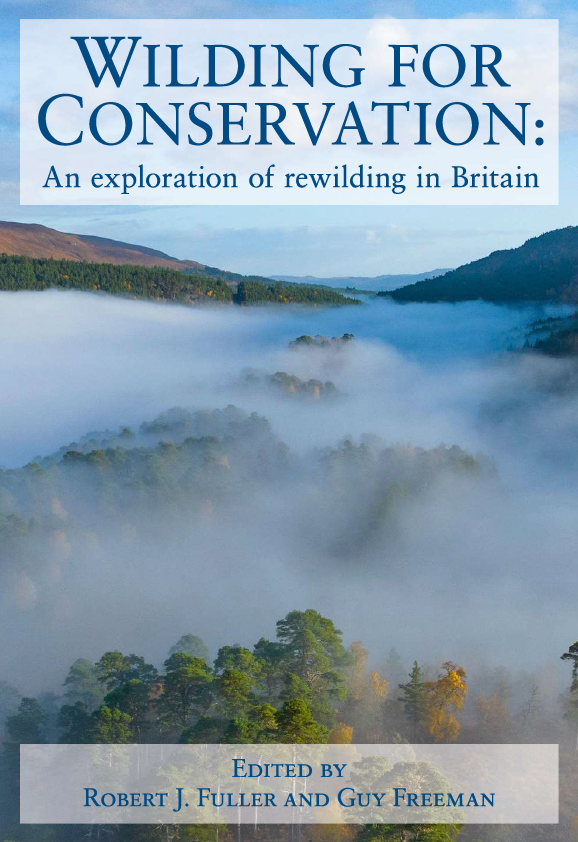
Wilding For Conservation: an exploration of rewilding in Britain
Between the years of 2021 and 2025, British Wildlife magazine ran a series of articles under the title of ‘Wilding for Conservation’. The magazine embarked on this series to explore the phenomenon of rewilding in the UK, examining the many philosophies and practices associated with rewilding as well as looking at its relationship with more traditional forms of conservation.
In total, twenty six articles were published as part of this series, they were written by different authors, all of whom had their own perspective on the subject. Together these articles created a valuable resource on probably the hottest conservation topic of our time, but, by their very nature, they were spread over five years worth of magazine issues rather than being together in one volume. That has now changed.
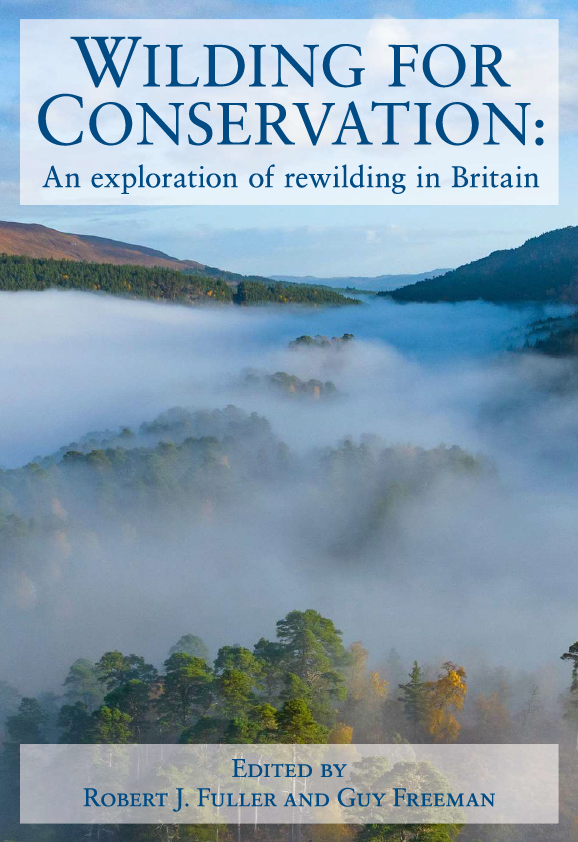
Wilding for Conservation: An exploration of rewilding in Britain is a compilation of all 26 articles, plus a concluding article by series editor Rob Fuller and magazine editor Guy Freeman. It is now available as a downloadable PDF, a sizeable document comprising almost 250 pages on the subject. The articles have been arranged into four sections: Wilding as we find it – diverse views and approaches; Wilding in the wooded landscape; Wilding in different contexts; and Wilding – future directions. Grouping them by theme rather than by the date order in which they were published makes it very readable and useful. There is a lot of material in this publication, using this format makes it all the more digestible to the reader, it enables the whole thing to flow.
I really enjoyed reading these articles again, and it was particularly useful to do so consecutively, enabling me to absorb them as a whole, rather than as individual components. As can be imagined, this volume encompasses many, many aspects of rewilding or wilding. From passive rewilding to pragmatic rewilding, from cultural history to natural history, from economics to ecology, this is a wide ranging look at the concept of rewilding/wilding from a variety of perspectives by an equally varied wide ranging group of conservationists.
There are hopes, there are fears, there are well referenced studies, there are well informed opinions and, of course, there are different viewpoints. A good example of this is the section on wooded landscapes, will they be (or should they be) open mosaics of successional stages or will they be (or should they be) dominated by closed canopy mature woodland? Should we look to planting, or should we leave it to natural regeneration? The views and opinions are as diverse as the subject itself.
All of us have our own ideas of what rewilding is or isn’t. We all have our own opinions on how it relates to more traditional types of conservation and therefore as we read this, we will all have our own views on what we are reading. That’s good, that’s healthy. As I read through the articles I found myself at times countering their assertions, at other times I found myself nodding my head in agreement, but mainly I found myself enjoying, as well as learning from, them all.
Wilding for Conservation will be an important reference source for writers, researchers, students, conservationists, land managers and policy makers for years to come. Compiling the articles into one volume has turned the whole series into a valuable and readily accessible resource for everybody with an interest in rewilding and conservation. I have only one criticism: it should be available as a book! Maybe it is me, but I much prefer to have a book in my hand when reading, something I can pull off the shelf and delve into when I am researching my writings. I would love to have Wilding for Conservation on my bookshelves rather than on a hard drive.
This is a very informative and readily readable work that I think will serve as a reference point for many years to come. I can whole heartedly recommend it to anyone involved in or interested in conservation in this country.
Reviewed by Ian Parsons
Ian spent twenty years as a Forest Ranger before turning his attention to Nature Writing. Ian is the author of A Vulture Landscape, Seasonality, Of the Trees and the Birds and is also the editor and a contributor to Great Misconceptions – Rewilding Myths and Misunderstandings.